Exports7 min read
Consolidated shipping from the Dominican Republic: share the container, not the cost
If your export does not fill a container, consolidation lets you pay for the space your cargo uses. Here is how it works and when it makes sense.
Share on Facebook(opens in a new tab)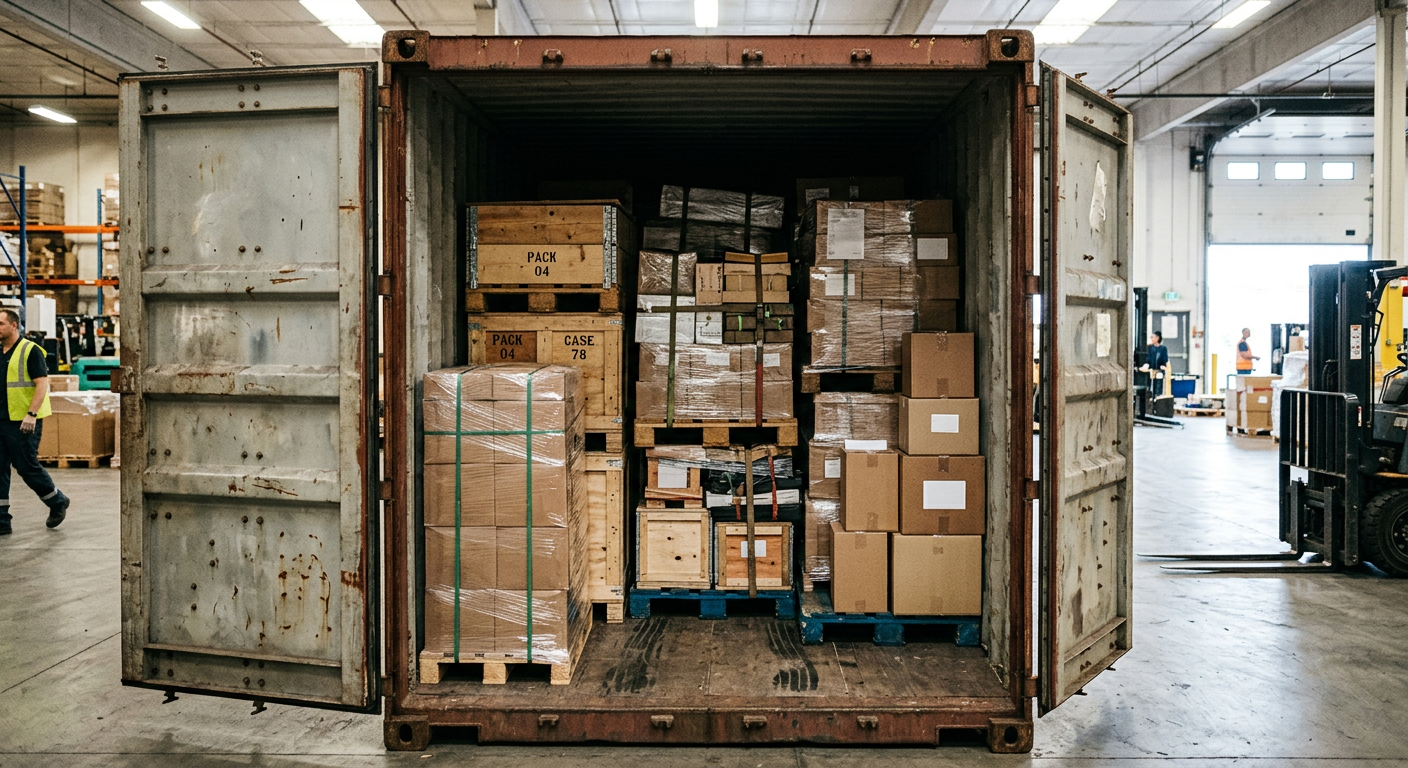
What consolidated shipping means
Consolidated shipping, usually called LCL (less than container load), groups cargo from several shippers into one shared container. Each shipper pays for the space and weight their own goods take up, while the container cost is spread across everyone inside it.
The alternative is FCL (full container load), where you book an entire 20-foot or 40-foot container for your cargo alone. FCL gives you a sealed box from origin to destination, but you pay for the whole container whether you fill it or not. We compare the two in detail in FCL vs LCL shipping.
Why it lowers costs for small and mid-size exporters
Many Dominican exporters ship in volumes that sit between a courier box and a full container: a few pallets of cigars, a run of cocoa or coffee samples for a new buyer, a batch of handcrafted goods, or a monthly order of manufactured products. For those shippers, a full container is often mostly empty space.
With consolidation, you are billed on the cargo you actually ship. That makes it possible to test new markets, serve smaller buyers and ship more often without waiting until you have enough to fill a container. Searching for cheap shipping from the Dominican Republic usually leads here first for exactly that reason.
- You pay for your share of the container, not the whole box
- Smaller, more frequent shipments become practical
- Inventory can move closer to when buyers need it
- It is easier to send trial orders to new customers
How a consolidated export moves
A typical LCL export from the DR follows these steps:
Pickup and delivery to the consolidation warehouse
Your cargo is collected from your facility, or you drop it off, and it is received at a consolidation warehouse. There it is measured, weighed and checked against your packing list. Pickup can be arranged from cities across the country, such as Santiago, La Romana or San Pedro de Macorís.
Export clearance and loading
The export declaration is filed with the Dirección General de Aduanas (DGA), your documents are reviewed, and your cargo is loaded with other shipments heading to the same destination port.
Sailing, deconsolidation and delivery
After the sailing, the container is opened at a destination warehouse, cargo is separated by shipper, import customs is handled, and your goods are released for pickup or door delivery.
How LCL is billed
Ocean LCL is normally charged per "revenue ton" or "weight or measure": the greater of your cargo volume in cubic meters (CBM) or its weight in metric tons. In practice, light and bulky goods are billed on volume and dense goods are billed on weight.
That is why packing matters so much in a shared container. Tight, uniform pallets take up less billable space than loose or oversized boxes. Our article on dimensional weight and packing tips explains how to reduce it, and our free CBM calculator shows your volume before you book.
When a full container makes more sense
Consolidation is not always the right choice. As your volume grows, there is a point where a dedicated container becomes the more economical option, and that point depends on the route, the timing and the cargo.
- Your cargo is close to filling a 20-foot container
- The goods are high value, fragile or need to stay sealed from origin to destination
- You need a refrigerated (reefer) container for produce
- Your timeline cannot absorb the extra consolidation and deconsolidation steps
Tips to get the most from consolidation
Shared containers move on a schedule, so consolidation rewards exporters who plan. Ask for the next available departure for your lane, prepare documents in advance, and deliver cargo on time for the warehouse cut-off. Missing a cut-off can push you to the next departure.
Label every piece clearly with the shipper, consignee and piece count, and make sure your packing list matches what is on the pallet. Cargo that does not match the paperwork can be held while it is checked. Our customs and documents guide and how to avoid extra fees when exporting cover the paperwork side.
For more ideas that apply to every export, read how to lower shipping costs from the Dominican Republic.
Is consolidation available for my route?
Availability and frequency depend on the destination and the time of year, so the best way to know is to ask. Rates depend on your volume, weight, route and service level. Tell us what you are shipping on our quote page or see the lanes we handle on our exports page.
Frequently asked questions
What is the minimum I can ship by LCL from the Dominican Republic?
Consolidators usually apply a minimum charge, often based on one cubic meter, even for smaller cargo. Very small shipments may be better suited to air or courier, and we can advise on the best fit.
Is consolidated shipping slower than a full container?
It can take a little longer because cargo is grouped before departure and separated at destination. The exact timeline depends on the route and the departure schedule, so we confirm estimates in your quote.
Can I ship cigars, coffee or cocoa by LCL?
Generally, yes, as long as the goods are properly packed and have the documents and permits they require. Tell us the product and destination so we can check the specific requirements.